
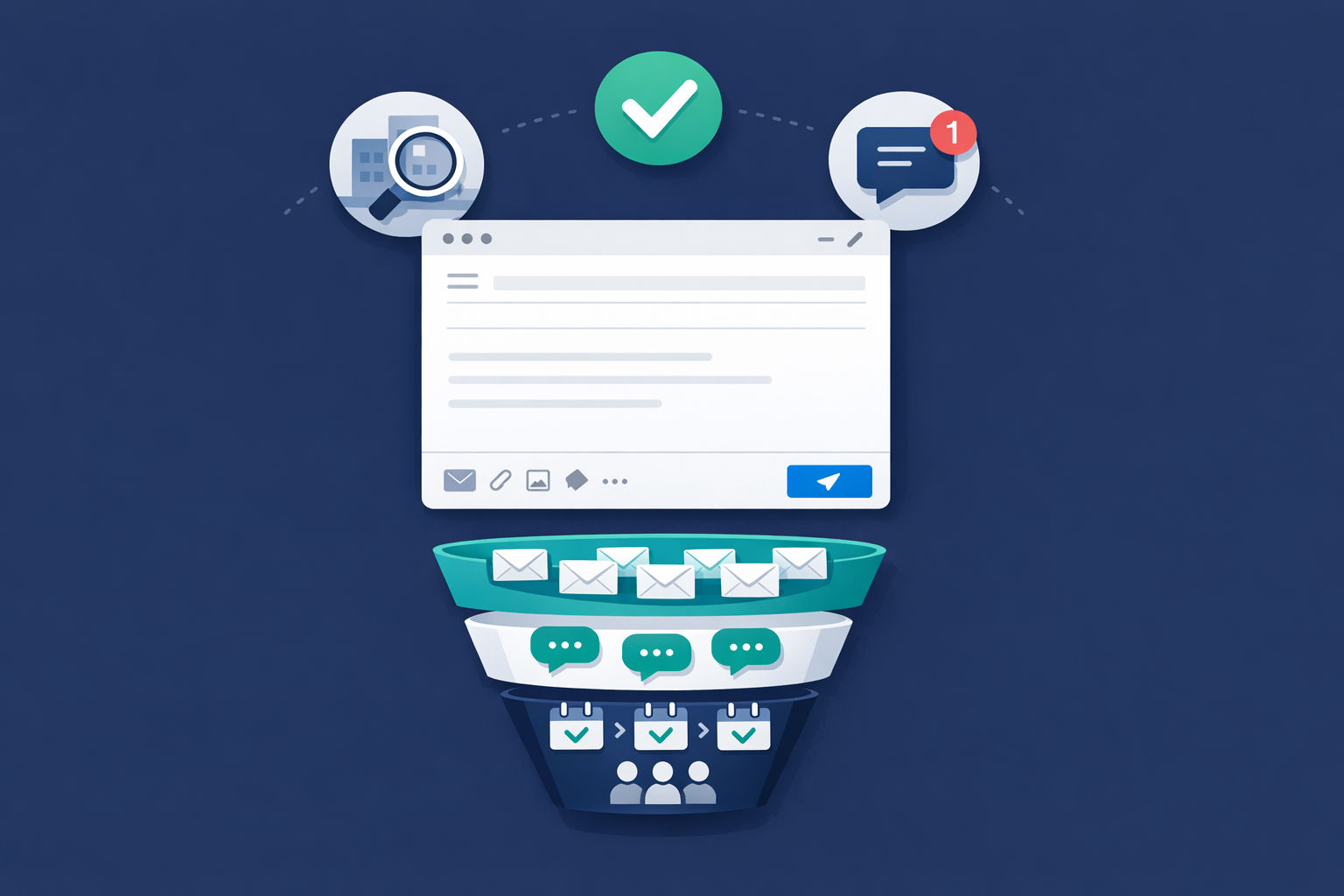
Here's what most AI consulting client acquisition outreach looks like right now: "Hi [First Name], we're an AI consultancy helping businesses leverage cutting-edge AI to transform their operations. Would you be open to a call?"
Delete. Every time.
Every prospect you're emailing has received some version of that message a dozen times this quarter. Generic "AI transformation" pitches now convert at under 0.3% reply rates according to recent outbound benchmarks from Puzzle Inbox. Meanwhile, the average B2B cold email reply rate has dropped from 8.5% in 2019 to roughly 3.4% in 2026 (Belkins, 16.5M email study). The bar isn't just higher — it's a completely different game.
But here's the thing: cold email still works for AI consulting. It works extremely well, actually — if you stop selling "AI" and start selling a specific outcome to a company that's already showing buying signals.
This is the ai consulting outreach strategy that books qualified calls. No generic advice. No "just personalise your emails." The actual system.
Step 1: Find Companies That Are Ready to Buy — Right Now
Most consultants build prospect lists based on firmographics: industry, company size, revenue. That's table stakes. It tells you who could buy AI services. It tells you nothing about who's ready to buy right now.
The difference between a 2% reply rate and a 10%+ reply rate is almost entirely targeting. Practitioners estimate that outcomes are 70–80% targeting, 20–30% copy. So before you write a single email, you need to find companies exhibiting real buying intent.
Here are the four AI-specific buying signals that separate "maybe someday" prospects from "budget approved, looking for a partner" prospects:
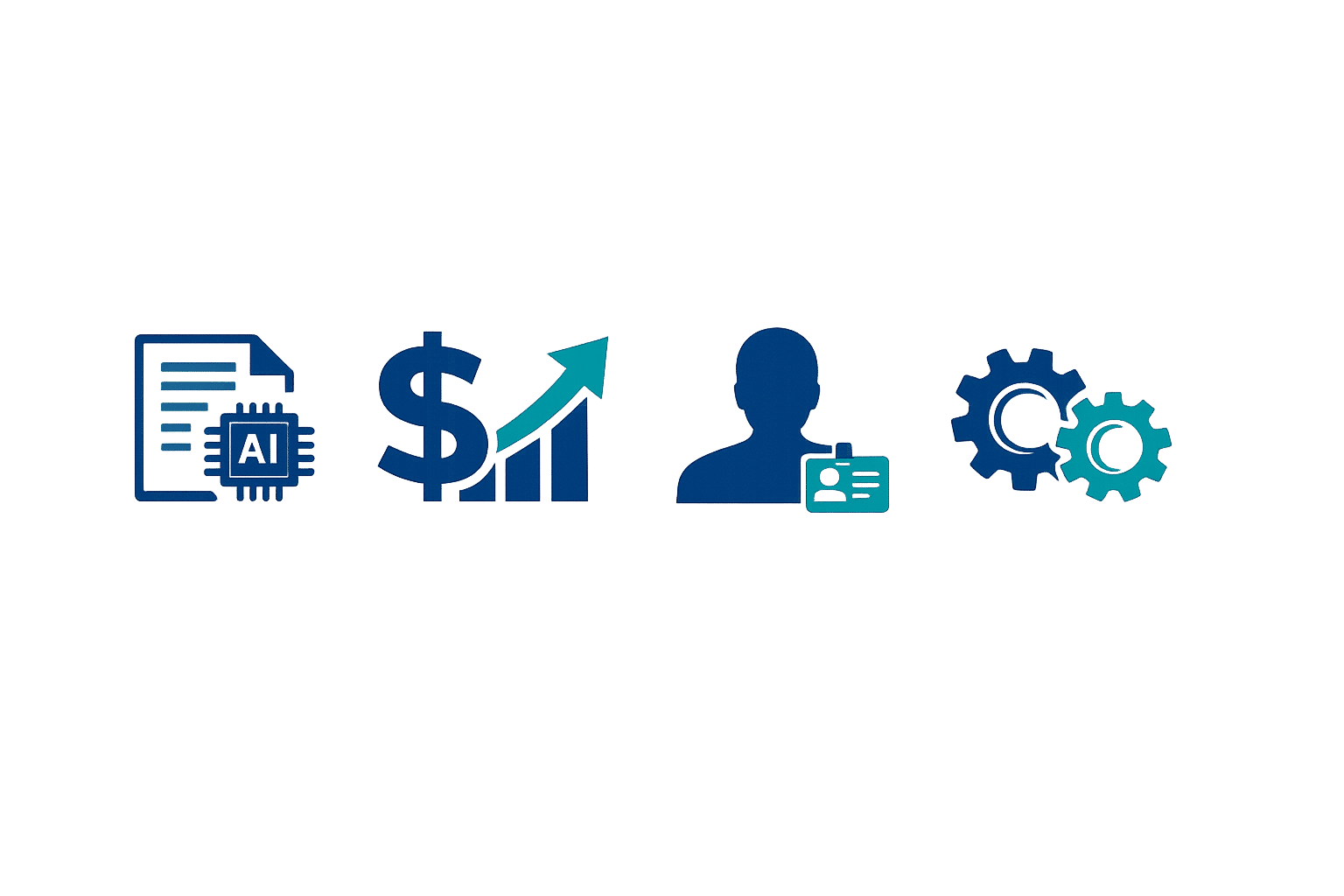
Signal 1: AI/ML job postings in the last 90 days. A company hiring a Head of AI, ML engineers, or data scientists has budget allocated and problems identified. They're building an AI function — and they almost certainly need outside expertise to move faster. Use LinkedIn Sales Navigator, Apollo, or PredictLeads to filter for companies with recent AI-related postings. If they've posted 2+ AI roles in 30 days, they're serious.
Signal 2: Recent funding round (Series A+ in the last 3–6 months). Fresh capital means fresh priorities. If the funding announcement mentions AI, automation, or data infrastructure in the press release, that's a direct signal. Cross-reference with AI job postings for a high-confidence target.
Signal 3: Leadership change — new VP of Engineering, CTO, or Head of Operations. New leaders need quick wins. They're reevaluating vendors, rethinking processes, and looking for partners who can deliver results in their first 90 days. A new operations leader at a company with manual-heavy workflows is one of the best cold email targets in AI consulting.
Signal 4: Competitor adoption. When a company's direct competitor publicly deploys AI (case study, press release, conference talk), the prospect's executive team starts asking "why aren't we doing this?" That urgency is your entry point.
The practical move: use Clay or Apollo to stack these signals. Pull firmographics, layer in job-posting data via Crustdata or PredictLeads, add technographic data from BuiltWith, and score each prospect. You should be deleting 60–70% of your list before it touches a sequence. If you're not cutting aggressively, your targeting isn't tight enough.
For a deeper framework on qualifying AI buyers before outreach, see our prospect scoring system for AI consulting.
ConsultKit helps you build a detailed buyer profile before outreach — surfacing a prospect's AI readiness, operational pain points, and likely use cases so your first email references real problems, not guesses. The consultants booking the most calls aren't writing better emails. They're doing better research.
Step 2: The 4-Email Sequence That Actually Books Calls
Forget 8-step drip campaigns. Belkins' analysis of 16.5 million B2B cold emails found that one-touch sequences had the highest reply rate at 8.4%, and adding a third email drops reply rates by up to 20%. More touches ≠ more replies.
The winning approach for how to get AI consulting clients through cold email is a lean 4-step sequence over 14 days: one strong opening email, two strategic follow-ups, and a clean close. Every email under 150 words. Every email with a single, specific purpose.
Day 0 — The Signal-Based Opener
Day 3 — The Case Study Bump
Day 8 — The New Angle (Value-Led)
Day 14 — The Permission-to-Close
Notice what's missing from every email: the words "AI transformation," a list of your services, a request for a 30-minute discovery call, and any mention of your technology stack. The prospect doesn't care about your tools. They care about their problems and your results. Emails with 6–8 sentences (under 200 words) achieve a 6.9% reply rate — compared to much lower rates for longer messages (Belkins, 2024).
Step 3: Email vs. LinkedIn — Use Both, But Differently
Cold email is your primary channel. It's more scalable, costs less per touch, and lets you run systematic A/B tests on subject lines, offer hooks, and CTAs. But LinkedIn dramatically amplifies your email outreach when used as a supporting channel, not a replacement.
Here's how to run them in parallel without being annoying:
| Channel | Best For | Timing | Tactical Move |
|---|---|---|---|
| Primary outreach, scalable sequences, A/B testing | Day 0 — start here | Send 20-50 semi-personalised emails/day; 3-5 highly personalised for Tier 1 accounts | |
| LinkedIn (profile view) | Warming before email | Day -1 (before email) | View their profile 24 hours before sending email 1. This creates a subtle recognition effect. |
| LinkedIn (engage) | Building familiarity | Days 1-7 | Like or comment on 1-2 of their posts. Short, substantive comments only — no 'Great post!' |
| LinkedIn (DM) | Following up with non-responders | Day 10+ (after email 2) | Send a short DM that references your email angle but doesn't repeat it: 'Sent you something about [topic] last week — curious if it landed.' |
How to sequence email and LinkedIn without doubling up the same pitch on two channels.
The data supports this approach: multichannel outreach combining email and LinkedIn boosts results by over 287% compared to email alone (Martal, 2026). LinkedIn InMail alone has 18–25% response rates but is expensive and difficult to scale. Email gives you volume; LinkedIn gives you trust. Use both.
One critical rule: never send the same message on both channels. If your email pitches a specific workflow, your LinkedIn DM should ask a question or share an observation. Different value, different angle, same campaign.
For a deeper dive on the LinkedIn side specifically, we have a separate guide on using LinkedIn to get AI consulting clients that covers profile optimisation, content strategy, and connection request sequences.
The 5 Outreach Mistakes That Kill Your Reply Rate
After reviewing benchmarks and practitioner data across thousands of AI consulting outreach campaigns, these are the patterns that consistently destroy response rates:
1. Leading with the tool instead of the problem. "We build custom GPT agents" means nothing to a VP of Operations. "We cut your support team's ticket backlog by 40% in 60 days" means everything. Buyers purchase outcomes, not technology. Every email should answer "so what?" in the first two sentences.
2. Asking for too much in the first message. Requesting a 30-minute discovery call from a stranger is a big ask. Top-performing consultants use lighter CTAs: "Worth a 15-minute call?" or "Want me to send the 1-pager?" Scott Channell, a B2B sales trainer, puts it bluntly: "You get more email response by not asking for a discovery call. Lighter asks get more response."
3. Being too technical. Your prospect is a business leader, not an engineer. Mentioning RAG pipelines, vector databases, or fine-tuning in a cold email immediately signals that you're a technologist, not a business partner. Save the technical depth for the second call.
4. Blasting 10+ people at the same company. Belkins' data is clear: reaching out to 1–2 contacts per company yields a 7.8% reply rate. Blasting 10+ people drops it to 3.8%. It also looks terrible when two people forward your email to each other internally.
5. The feature-dump email. Listing chatbots, voice agents, CRM automations, lead scoring, and document processing in one email communicates zero expertise. It reads like a menu, not a message from someone who understands their specific situation. Pick one pain point per email. Be the specialist, not the generalist.
The Pipeline Math: What Realistic Results Look Like
Let's make this concrete. Based on current benchmarks for well-targeted AI consulting outreach:
| Metric | Industry Average | Strong Performance | Top Tier |
|---|---|---|---|
| Reply rate (total) | 3–5% | 5–7% | 10%+ |
| Positive reply rate | 1–2% | 2–4% | 5%+ |
| Meetings booked per 100 contacts | 1–2 | 3–5 | 6–8 |
| Sequence length | 5–8 emails | 3–4 emails | 2–3 emails |
| Emails per day (per inbox) | 30–50 | 20–30 | 10–20 (highly personalised) |
Cold email benchmarks for AI consulting outreach. Sources: Belkins 2024, Martal 2026, Puzzle Inbox 2026.
At 1,500 prospects per month with a solid sequence, you can realistically expect 30–60 positive replies, 8–15 booked calls, and 3–6 scoping engagements. A single pilot at $8–25K pays for your entire outbound function for months.
The key levers, in order of impact:
- Targeting — tighter ICP + buying signals = higher reply rate
- Offer specificity — one workflow, one outcome, one number
- Email brevity — under 150 words, 6–8 sentences, one CTA
- Send timing — Thursday sends get the highest reply rate at 6.87%; evenings (8–11 PM) peak at 6.52% (Belkins)
- Follow-up discipline — 3–4 touches over 14 days, then stop
If you're under 3% total reply rate, your targeting or offer is broken. If you're between 3–5%, your copy and timing need work. If you're above 7%, keep scaling — you've found a vein.
For the full picture on what happens after they reply — from qualification to signed contract — see our guide on building a repeatable AI consulting sales process. And if you're still dialling in what to charge once you land the call, our AI consulting pricing guide has the benchmarks.
