

Here's a pattern you'll recognise if you've been selling AI consulting for more than a few months: a client asks for an "AI strategy." You quote a number that feels reasonable. Two weeks in, they want you to audit their data infrastructure. Three weeks in, they need a demo for the board. By month two, you're building an MVP that was never in the original conversation — and you're eating the hours because there's no change order clause in your agreement.
You didn't get outworked. You got out-scoped.
According to RAND Corporation's 2025 analysis, 80.3% of AI projects fail to deliver their intended business value — and only 19.7% fully succeed. PMI research shows scope creep affects 52% of all projects, making them 2.5x more likely to fail. The lesson isn't that AI is hard. It's that most AI consulting engagements are scoped so loosely that failure is structurally inevitable.
A solid AI consulting scope of work is the single highest-leverage document in your practice. It's not admin. It's margin protection. Here's how to build one that actually works.
What a Proper AI Consulting Scope of Work Includes
If your scope of work reads like a vague project description — "conduct AI assessment and provide recommendations" — you've already lost. A proper AI consulting scope of work is a boundary document. It protects you and the client by making the invisible visible.
Every AI consulting scope of work you send should include these six sections:
| Section | What It Covers | Why It Matters |
|---|---|---|
| **Deliverables** | Specific, named outputs — e.g., "AI Readiness Assessment Report (PDF, 15-25 pages)" or "Workflow automation prototype for accounts payable" | Eliminates ambiguity about what "done" looks like |
| **Timelines** | Phase durations with milestone dates — not just a final deadline | Prevents endless discovery spirals and keeps pace |
| **Exclusions** | What is explicitly NOT included — e.g., data migration, staff training, ongoing maintenance | Blocks the most common scope creep vectors |
| **Success Metrics** | Measurable KPIs — e.g., "85% classification accuracy" or "40% reduction in manual processing time" | Stops the client from moving goalposts post-engagement |
| **Assumptions** | What must be true for the project to succeed — e.g., "Client provides data access within 5 business days" | Shifts liability for delays back to the client |
| **Change Order Triggers** | Specific conditions that require a paid change order — e.g., adding new departments, changing data sources, revising success criteria | The single most important clause for margin protection |
The six essential sections of an AI consulting scope of work
Most consultants nail the deliverables section and completely skip exclusions. That's backwards. A client who sees "AI readiness assessment" in your deliverables will assume it includes data migration planning, tool procurement, vendor evaluation, staff training, and an implementation roadmap — unless you explicitly state otherwise. Write exclusions before you write deliverables. If it's not in scope, it needs to be named.
The 3 Scoping Mistakes That Kill Your Margins
You don't need a dozen things to go wrong. These three are responsible for the vast majority of AI consulting projects that bleed money.
Mistake #1: Vague Success Metrics
RAND's 2025 research found that 73% of failed AI projects lacked clear success metrics from the start. When your scope says "improve customer service with AI" instead of "reduce average ticket resolution time by 30% within 90 days," you've handed the client an open-ended measuring stick.
Vague metrics create a dynamic where the client can perpetually say "it's not quite there yet" — and you keep working for free. Every AI consulting scope of work needs a quantified definition of done. Not "the AI works well." Not "stakeholders are satisfied." Numbers. Percentages. Timeframes.
Mistake #2: Open-Ended Discovery
Discovery is supposed to inform the scope. Instead, most consultants let discovery become the scope. What starts as "let's understand your current workflows" turns into six weeks of interviews, data audits, and stakeholder alignment meetings — none of which were priced.
The fix is dead simple: cap discovery. A fixed-fee Phase 1 assessment with a hard deadline (typically 2-3 weeks) and a defined deliverable. Once discovery is a paid product — not a free favour — you control the timeline. We've written extensively about why the audit-first sales model beats traditional discovery calls for exactly this reason.
Mistake #3: No Change Order Clause
This is the one that destroys margins at scale. Without a formal change order process, every "quick addition" and "small tweak" gets absorbed into your original price. A bank's $2M AI fraud detection project ballooned to $8M due to unchecked scope additions — delivered 18 months late with features nobody used.
Your contract should specify: any change to deliverables, timelines, data sources, or success metrics triggers a written change order with revised pricing and timeline before work begins. Three rounds of revision included; additional refinement at your hourly rate. No exceptions.
If you can't price it, you haven't scoped it.
— Gordon James, Silicon Insider
The 3-Phase Engagement Framework (With Real Numbers)
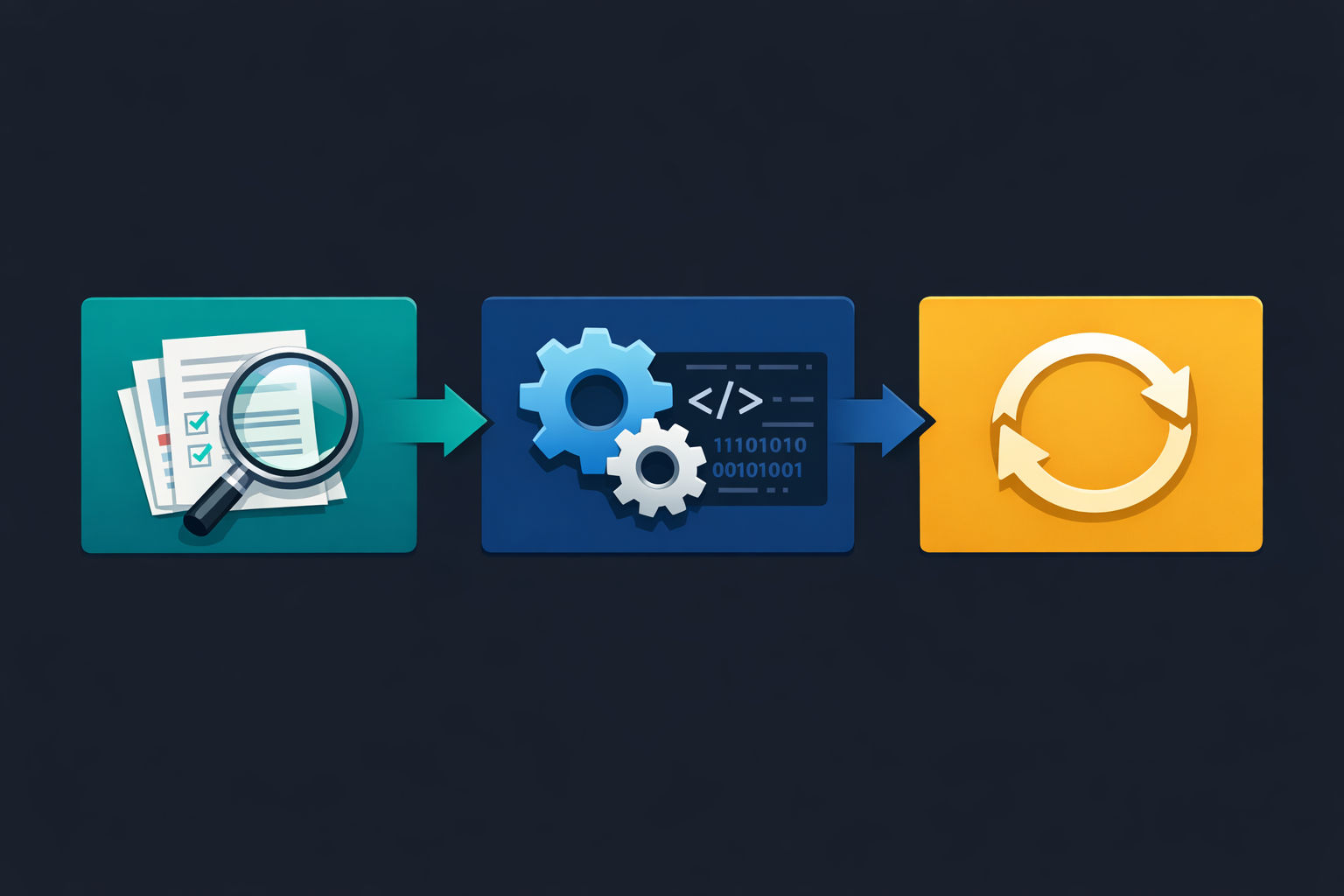
The consultants who protect their margins don't sell monolithic projects. They sell phases. Each phase is independently scoped, independently priced, and requires a separate sign-off before the next begins.
This structure does three things: it de-risks the client's investment, it lets you qualify the engagement before committing to implementation, and it gives you natural upsell points without ever feeling pushy.
Here's the framework used by experienced AI consultants billing $150-$500/hour:
Phase 1: Assessment / Audit (Fixed-Fee)
Phase 2: Implementation (Project-Based, Optional)
Phase 3: Retainer (Monthly, Optional)
Don't present all three phases at once in your initial proposal. Lead with Phase 1 only. Position it as: "Before I can give you an accurate implementation quote, I need to understand your data, systems, and processes. The assessment gives us both a clear picture — and it gives you a deliverable you can use whether we continue working together or not."
This reframes the assessment as low-risk for the client and high-value for both sides. For the full proposal structure, see our guide on how to write an AI consulting proposal that wins.
Red Flags in Client Briefs That Signal Scope Creep
Not every engagement is worth taking. And some of the most dangerous engagements look the most attractive on paper. After enough burned projects, you start to recognise the patterns.
Here are the red flags experienced AI consultants watch for during the scoping conversation. Catching these early starts during lead qualification — the BANT+Data framework for qualifying AI consulting leads surfaces most of these signals in under 10 minutes, before you ever open a scope document.
| Red Flag | What They Say | What It Actually Means |
|---|---|---|
| **The Kitchen Sink Brief** | "We want AI across the whole organisation" | No prioritisation, no clear problem. This client will add departments and use cases indefinitely. |
| **The Moving Goalpost** | "We'll know it when we see it" | No defined success metrics. You will never reach 'done.' |
| **The Committee Client** | "We need to get buy-in from 6 stakeholders" | Every stakeholder will add requirements. Scope death by a thousand cuts. |
| **The Budget Avoider** | "Let's not talk about budget yet" | They either don't have one or expect you to work for exposure/equity potential. |
| **The Free Discovery Trap** | "Can you do a quick audit so we can see if it's worth it?" | They want Phase 1 for free. If they won't pay for the assessment, they won't pay for implementation. |
| **The Urgency Smokescreen** | "We need this done yesterday" | Unrealistic timelines signal they haven't thought through the complexity — and they'll blame you when reality hits. |
Scope creep red flags in AI consulting client briefs
During your scoping conversation, ask: "How do you prefer to handle scope changes during a project?" Their answer tells you everything. Clients who expect a formal change process are clients who respect boundaries. Clients who say "we just figure it out as we go" are telling you they expect free scope expansion. Qualify accordingly.
The best AI consultants don't start scoping from a blank page. They start from a structured framework that's already mapped the client's AI readiness, data maturity, and highest-impact opportunities — before the first proposal goes out.
That's the logic behind the audit-first sales model: you don't scope reactively based on what the client thinks they need. You scope proactively based on what the data actually shows.
A thorough AI readiness assessment gives you the foundation for a tight scope: real data on the client's data infrastructure, workflow maturity, and technical constraints — so your Phase 1 deliverable is built on evidence, not assumptions. The result: fewer change orders, faster proposals, and engagements that start with clarity instead of chaos.
Scoping tightly also sets you up to prove ROI. When your success metrics are defined before the work starts, you have the baseline data you need to show progress during the engagement — before final results arrive. For a practical guide to surfacing those early wins, see how to prove AI ROI to a client who hasn't seen results yet. And once results do come in, building a structured case study from that engagement is what turns one successful project into your most effective sales asset.
Before scoping any implementation, it also pays to consider how your service tiers are defined. The framework for packaging AI services into tiers that sell determines the scope boundaries for each engagement before a client brief ever lands on your desk — and makes change order conversations far less fraught.
For SMB automation projects specifically, the AI workflow automation playbook for SMBs includes fixed-price scoping ranges, delivery timelines, and the retainer model that turns one-off builds into recurring revenue — all of which feed directly into the 3-phase engagement framework above.
Because the consultants who win in this market aren't the ones chasing every brief. They're the ones who sell with structure, scope with precision, and know when to walk away. And once you've nailed the first engagement, the path to recurring retainer revenue becomes a natural next step — not a hard sell. From there, the next question is how to systematically upsell AI services into the same account, using the roadmap your scope already created.
