

You know the drill. A prospect is interested in AI. They've got budget. They've got pain. But when you pitch a $40K implementation project, you get the same response: "That sounds great, but we need to think about it."
Three weeks later, they've gone with a cheaper agency. Or done nothing at all.
Here's what most AI consultants miss: the problem isn't your service. It's your entry point. You're asking someone to marry you on the first date. And in AI strategy consulting — where 73% of project failures trace to readiness gaps that existed before the engagement even started — that's a recipe for stalled pipelines and ghosted proposals.
The fix isn't lowering your price. It's changing the offer.
A paid AI strategy workshop — a structured, half-day session priced at $3,000–$10,000 — is the single most profitable thing you can add to your consulting practice. Not a stepping stone. Not a loss leader. A genuine, high-margin service that simultaneously generates immediate revenue, qualifies serious buyers, and creates a natural path into larger engagements.
Let me show you exactly how to build, price, and sell one.
Why a Paid Workshop Beats a Full Engagement as Your First Offer
The economics are simple but most consultants overlook them.
When you lead with a full AI implementation proposal — $30K, $50K, $100K+ — you're asking a prospect to make a high-stakes decision with incomplete information. They don't know if you're good. They don't know if AI will actually work for their specific situation. And their CFO definitely doesn't know why this line item shouldn't get cut in the next budget review.
A paid workshop flips every one of those dynamics:
- It de-risks the decision. $5,000 for a half-day workshop is a rounding error compared to a six-figure engagement. It's often within a department head's discretionary spend — no procurement process, no board approval, no six-week sales cycle.
- It qualifies seriousness. Anyone willing to pay $3K–$10K for a strategy session is a real buyer. Free calls attract tire-kickers. Paid diagnostics attract people ready to invest. Coaches who switch from free to paid initial sessions report a 70–80% reduction in no-shows and significantly higher conversion to ongoing work.
- It positions you as a strategic partner, not a vendor. When you walk a leadership team through their AI opportunities, quantify the ROI, and hand them a prioritised action plan — you've just demonstrated exactly what working with you looks like. You're not pitching anymore. You're already delivering.
And here's the number that should make you pay attention: consulting firms that deliberately position workshops as gateway offers report 20–40% of satisfied workshop clients converting into follow-on engagements. When those follow-on projects run $30K–$150K+, a single workshop that costs you 8–12 hours of total effort becomes the most profitable thing in your practice.
A $5,000 workshop takes roughly 4 hours of prep and 4 hours to deliver. That's an effective rate of $625/hour. The average independent AI consultant's hourly rate is $200–$350 (Leanware, 2026). Even before the follow-on engagement, the workshop alone is nearly 2x your normal rate — and you haven't discounted anything.
How to Structure a 4-Hour AI Strategy Workshop That Justifies Premium Pricing
The mistake most consultants make with workshops is treating them like a presentation. They show up, deliver a slide deck about AI trends, and wonder why the client doesn't sign a follow-on contract.
A workshop that commands $3K–$10K must be collaborative, diagnostic, and outcome-driven. The client's leadership team should leave with tangible artifacts they couldn't have produced on their own — not just inspiration, but decisions.
Here's the structure that works:
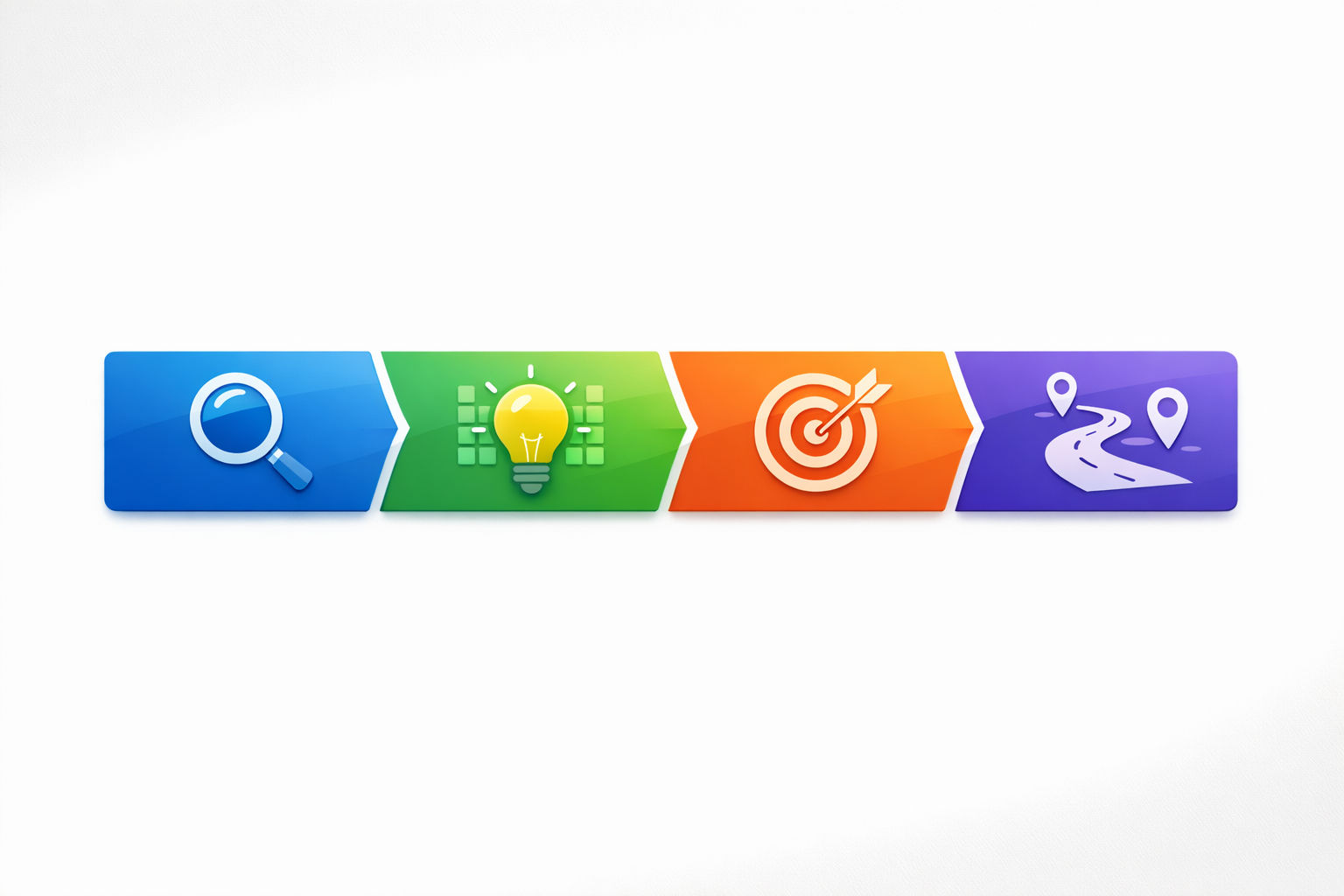
Phase 1: Business Context & Pain Discovery (60 minutes)
Phase 2: AI Opportunity Mapping (75 minutes)
Phase 3: Prioritisation & Readiness Assessment (45 minutes)
Phase 4: 90-Day Action Plan & Next Steps (60 minutes)
The Deliverables That Make It Worth $5K+
The client should walk away from this workshop with three concrete artifacts — not a vague summary email, but professional, polished documents they'll reference and share internally:
- A Prioritised AI Opportunity Map — every viable AI use case in their organisation, scored by impact and feasibility, visualised in a format their exec team can present to the board.
- An AI Readiness Assessment Report — a scored evaluation of their data maturity, technical infrastructure, governance posture, and organisational readiness. This is where a tool like ConsultKit's AI readiness assessment output becomes invaluable — it generates a professional, white-labelled report the client can act on immediately, and it positions your workshop deliverable as something far beyond a consultant's personal opinion.
- A 90-Day Action Plan — specific next steps, ownership, timelines, and success metrics for the top-priority AI opportunities.
These aren't just deliverables. They're proof of value that circulates inside the client's organisation long after you've left the room. Every time someone references that opportunity map in a leadership meeting, your name is attached to it.
For a deeper look at structuring AI consulting deliverables that drive follow-on work, we've covered this extensively.
How to Price Your AI Strategy Workshop (And Why Discounting Kills It)
Let's talk numbers.
Independent AI consultants typically charge $200–$350/hour, with boutique firms at $250–$500/hour (Leanware and AIDOLS 2026 rate guides). AI consulting rates have risen 10–15% year-over-year since 2024. Meanwhile, productised AI strategy assessments price between $5,000 and $25,000 at the SMB level, with firms like Armanino publishing fixed-fee AI strategy workshop packages at $15,000–$25,000.
Your workshop should price in the $3,000–$10,000 range for most independent consultants and small firms. Here's the framework:
| Factor | $3,000–$5,000 Range | $5,000–$10,000 Range |
|---|---|---|
| Client Size | SMBs, 10–50 employees | Mid-market, 50–500 employees |
| Decision Maker | Founder or CEO | VP Ops, CFO, CTO |
| Workshop Duration | Half-day (4 hours) | Full-day (6–8 hours) |
| Deliverables | Opportunity map + action plan | Opportunity map + readiness report + action plan + executive summary |
| Your Total Time Investment | 8–10 hours (incl. prep) | 12–16 hours (incl. prep) |
| Effective Hourly Rate | $300–$625/hr | $312–$833/hr |
| Follow-on Potential | $15K–$50K implementation | $30K–$150K+ implementation or retainer |
Workshop pricing framework based on client size and scope
The moment you discount a strategy workshop, you've repositioned it as a sales cost rather than a professional service. Your workshop fee signals that your strategic thinking has standalone value. As pricing strategist Janene Liston puts it: "Negotiate deliverables and length. Avoid negotiating price. Reducing price erodes your perception of value." If a prospect pushes back on price, adjust the scope — offer a half-day instead of a full day, or reduce the number of attendees — but hold the rate.
The Value-Based Justification
When a prospect asks "Why should I pay $5,000 for a single day?" — and they will — your answer is simple:
"Because the alternative is spending $50,000–$200,000 on an AI initiative that targets the wrong problem. This workshop ensures you invest in the right things first."
That's not a pitch. It's a fact. McKinsey's 2025 State of AI survey found that while nearly 9 in 10 organisations are regularly using AI, only 39% report measurable EBIT impact at the enterprise level. The gap between "using AI" and "getting value from AI" is exactly where your workshop sits.
A $5,000 workshop that prevents a $100,000 misallocation is a 20:1 return. Frame it that way, and the price conversation ends fast.
How to Sell the Workshop to Sceptical Buyers
You know who doesn't respond to "Let me tell you about our AI strategy workshop"? Everyone.
You know who responds to "I've identified three AI opportunities in your operations that are probably costing you $200K+ a year in labour — I'd like to show you how to validate and prioritise them"? The operations director who just got asked by the CEO to "figure out the AI thing."
Here's the outreach framework that sells workshops:
Lead With the Pain, Not the Process
Your outreach — whether it's a LinkedIn message, an email, or a warm introduction — should lead with a specific observation about the prospect's business. Not "we offer AI strategy workshops" but:
- "I noticed your team processes approximately 400 invoices per week manually. Most firms your size automate 60–70% of that with AI document processing. Happy to show you exactly where the savings are."
- "I work with [industry] companies your size. Most are leaving $150K–$300K on the table by not automating their client reporting. I run a focused half-day session that maps out exactly where AI fits your operation — and where it doesn't."
If you're building your outreach system from scratch, our guide on cold outreach sequences that actually get replies covers the mechanics in detail.
The CFO-Friendly Frame
Operations directors and CFOs don't buy "AI transformation." They buy risk reduction and ROI validation. Frame the workshop as:
- A decision-making tool, not a consulting engagement. "The output is a prioritised investment map your leadership team can use to allocate AI budget with confidence."
- A fraction of the cost of getting it wrong. "Companies spend $50K–$200K on AI initiatives that target the wrong problem. This session costs 3–5% of that and ensures the larger investment lands correctly."
- A fixed scope with no ongoing obligation. "It's a single day, a fixed fee, and you walk away with three documents you can act on whether or not we ever work together again."
This framing works because it aligns with how budget-holders actually think. They don't want to be sold on AI's potential. They want to know the specific risk of doing nothing and the specific cost of a wrong first move.
Free discovery calls attract tire kickers. Paid diagnostics attract serious buyers. They deliver value, maintain positioning, and filter out the people who aren't ready to invest.
— James Schramko, SuperFastBusiness
Where to Find Workshop Buyers
The best workshop prospects aren't searching "AI strategy consulting" on Google. They're in three places:
- Your existing network. Past clients, colleagues, and LinkedIn connections at companies with 50–500 employees in industries where AI adoption is accelerating but implementation is lagging (professional services, manufacturing, financial services, healthcare operations). A single warm introduction outperforms 50 cold emails.
- Industry events and associations. Not as a speaker selling from the stage — as an attendee who has specific, relevant conversations about operational challenges.
- Referrals from complementary service providers. Accountants, IT managed service providers, and management consultants who serve the same clients but don't offer AI strategy. One referral partner who sends you two workshop clients per quarter is worth more than any marketing funnel.
If you're still building your first client base without case studies, the workshop is actually the perfect starting point — it's low-risk for the client, it generates a case study fast, and it builds your portfolio of deliverables.
The Conversation That Turns a $5K Workshop Into a $50K Engagement
This is where the workshop earns its real ROI — not for the client, but for your practice.
Here's what happens at the end of every well-run AI strategy workshop: the client's leadership team is sitting around a table, staring at a prioritised opportunity map showing $200K–$500K in annual savings or revenue upside across three to five AI initiatives. They have a 90-day action plan. They have a readiness assessment showing exactly where they're strong and where they have gaps.
And then someone asks the question you've been waiting for: "So... can you help us actually do this?"
That question is worth its weight in gold because you didn't pitch it. They asked. The dynamic has completely shifted from "consultant selling a service" to "trusted advisor being invited to continue."
How to Engineer That Moment
The transition doesn't happen by accident. It's built into the workshop structure:
- During Phase 4 (the 90-day action plan), be specific about what implementation requires. Don't vaguely gesture at "next steps." Say: "This initiative requires a data integration assessment, vendor selection, a 6-week pilot, and change management support. That's roughly a 3-month engagement."
- Name the gap between the plan and execution. "You now have the roadmap. The question is whether your team has the bandwidth and expertise to execute this in-house, or whether you'd benefit from someone who's done this 15 times before."
- Have a proposal ready, but don't present it in the room. The worst thing you can do is turn the last 15 minutes of a strategy workshop into a sales pitch. Instead: "I'll send over a brief proposal for the implementation work by Thursday. No pressure — the action plan is yours to run with either way."
This approach works because the workshop has already done the selling. The client has spent four hours experiencing your expertise firsthand. They've seen you diagnose problems their own team missed. They've watched you structure complex decisions into clear priorities.
Workshops that include a formal readiness assessment with scored outputs — where the client can see exactly where they're "red" vs "green" on data maturity, governance, or infrastructure — convert to follow-on work at significantly higher rates. The gaps you surface are the scope of the next engagement. Using a structured prospect scoring and readiness framework makes this transition feel organic, not sales-driven.
The Unit Economics: Why This Is Your Most Profitable Offer
Let's run the full picture on a consultant delivering two workshops per month:
| Metric | Value |
|---|---|
| Workshop price | $5,000 |
| Workshops per month | 2 |
| Direct workshop revenue | $10,000/month |
| Total hours per workshop (incl. prep & follow-up) | 10 |
| Effective hourly rate | $500/hr |
| Follow-on conversion rate | 30% |
| Average follow-on engagement value | $40,000 |
| Expected follow-on revenue per month | $24,000 |
| Total monthly revenue from workshop practice | $34,000 |
| Annual revenue from 24 workshops | $408,000 |
Unit economics of a workshop-first consulting practice
That's $408K per year from 24 workshops — and that's a conservative model. Senior consultants running full-day workshops at $7,500–$10,000 with higher conversion rates are clearing $500K+ annually, with the workshop itself consuming less than half their available time.
Compare that to pure project-based consulting where you're billing $200–$350/hour, managing 6–8 simultaneous engagements, and spending 30% of your time on unpaid business development. The workshop model isn't just more profitable. It's more sustainable.
Start With One
You don't need a perfect workshop to start. You need a good-enough structure, a clear set of deliverables, and one client willing to go through the process.
Here's your action plan:
- Define your workshop offer. Name it, scope it to 4 hours, list the three deliverables (opportunity map, readiness report, 90-day plan).
- Set your price. $3,000 minimum. $5,000 if you have any relevant experience. Don't negotiate.
- Identify three warm prospects in your network — companies with 30–500 employees in industries where AI adoption is accelerating.
- Send a specific, pain-driven outreach message to each one this week.
- Deliver the first workshop. Refine based on what worked. Raise your price by 20% for the next one.
The paid AI strategy workshop isn't just an offer. It's a business model — and for most AI consultants, it's the fastest path to a practice that's both profitable and sustainable.
